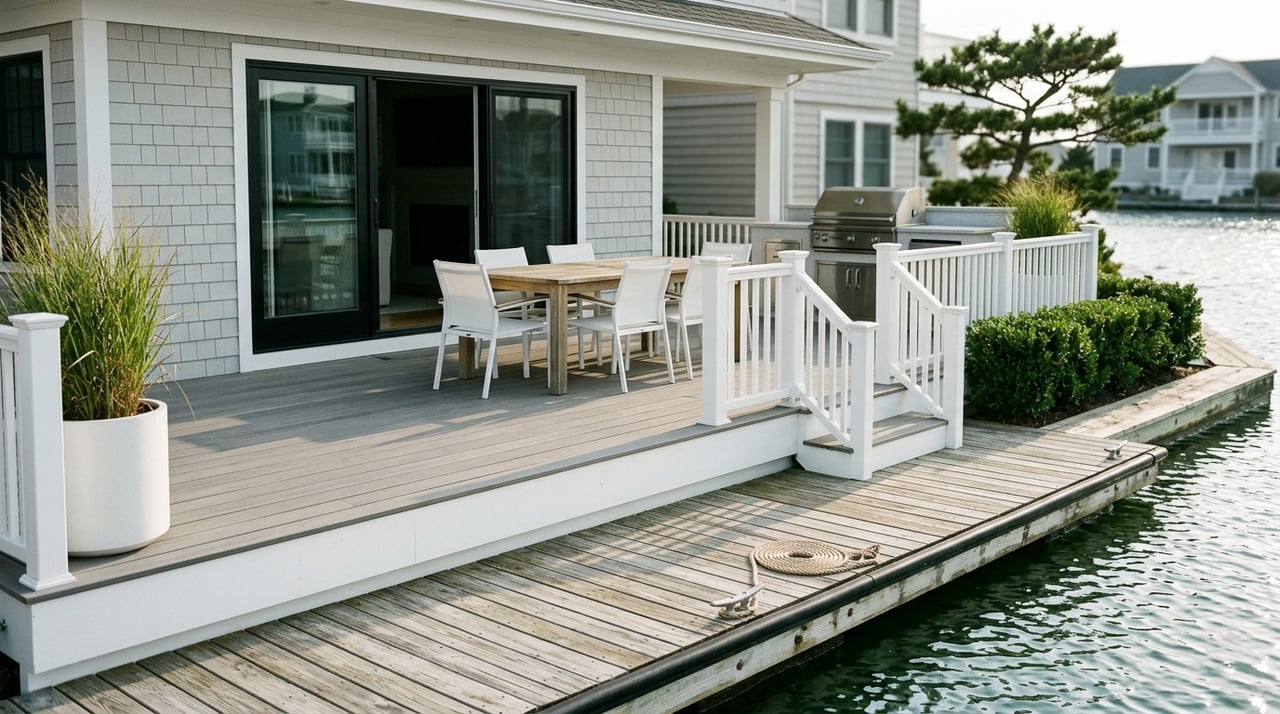
Picture this: coffee at sunrise as the bay wakes up, an easy launch for a mid‑morning cruise, and a sunset dinner on your deck as boats drift by. If you are drawn to water, that rhythm is what bayfront living in Ocean City delivers. At the same time, coastal ownership comes with rules, insurance, and upkeep that reward good planning. In this guide, you will see what daily life really looks like, where you will keep your boat, and what to know about permits, flood zones, and costs so you can move forward with confidence. Let’s dive in.
What bayfront living feels like
Bayfront life in Ocean City centers on the back‑bay system and Great Egg Harbor Bay. You get direct or near‑direct access to the Intracoastal Waterway, frequent sunset views, and space designed for outdoor entertaining. Many bayfront properties include docks, decks, or seawalls that make the water part of your day.
The lifestyle is social and seasonal. Summer weekends bring more boats on the water and busier roads. Late fall through spring feels quieter, which many owners enjoy for calm sunsets and unhurried routines. If you like boating, fishing, paddling, or simply sitting on the dock with friends, the bayfront sets the stage.
Boating access made simple
You have both public and private ways to get on the water. Ocean City operates a municipal boat ramp at the end of Tennessee Avenue with posted hours, fees, and trailer parking rules. You can review current ramp details on the city’s page for the Tennessee Avenue municipal boat ramp.
If you prefer a slip, nearby marinas behind the island offer seasonal wet slips, dry storage, fuel, and service. All Seasons Marina lists hundreds of slips plus dry‑storage options right off the ICW, which makes day trips to the inlet or a quick sunset cruise straightforward for slip holders. For a broader view of facilities and amenities across the county, the county maintains a Cape May County marina inventory.
Boat‑club and rental options have also expanded in recent years, including at larger facilities. That makes it easy to host family and friends on the water, even if you do not keep your own vessel at the house.
Outdoor spaces and views
Bayfront lots are typically oriented for light and sunsets. Many owners invest in multi‑level decks, outdoor kitchens, and seating areas that flow toward the dock. These spaces are ideal for morning coffee, a quick paddle, or evening gatherings.
If you plan improvements, remember that docks, bulkheads, and shoreline work fall under specific coastal rules. Before you budget for bigger outdoor upgrades, read the permitting section below so you can line up the right approvals.
Daily routines and seasonality
- Everyday errands: You will rely on on‑island markets and shops for most needs. For larger grocery runs and year‑round variety, many residents drive to Somers Point on the mainland.
- Summer flow: Expect more activity on the water and on the roads. Getting off‑island is mainly via Route 52 and the 34th Street Bridge, which can be busy during peak times. The state’s Route 52 project documents these causeway connections and traffic patterns along the corridor. For background, see the Route 52 causeway overview.
- Boat logistics: Trailer users should check ramp hours and fees each season. Slip holders follow marina policies on fueling, pump‑out, and seasonal storage. All Seasons’ dockage information outlines typical offerings and policies.
Permits and coastal rules you should know
Most in‑water or shoreline work requires approvals. New Jersey’s coastal rules are administered under CAFRA and the Waterfront Development Law by the NJDEP Division of Land Use Regulation. Depending on the project, federal review by the U.S. Army Corps of Engineers may also apply.
- State rules: Review NJDEP’s coastal program and enforceable policies to understand when permits are needed for docks, pilings, bulkheads, or dredging. Start with the NJDEP coastal permit framework.
- Federal review: Work in navigable waters or involving dredge/fill can trigger U.S. Army Corps permits. For guidance and contacts, visit the U.S. Army Corps of Engineers, Philadelphia District.
What this means for you: plan ahead. Non‑trivial projects often require engineering drawings, surveys, and months of review. Confirm a property’s existing permit history before you buy, and get a coastal engineer or qualified marine contractor involved early if you intend to upgrade docks or bulkheads.
Flood zones, elevation, and insurance
Bayfront homes are commonly in AE or VE flood zones. Your flood insurance cost and any elevation work will depend on your specific site, structure elevation, and local rules.
- City guidance: Ocean City’s Flood Damage Prevention resources explain elevation certificates, substantial improvement thresholds, and how local freeboard interacts with Base Flood Elevations. Read the city’s Home Elevation FAQs.
- FEMA maps: Cape May County’s Flood Insurance Rate Maps serve as the baseline for BFEs used by lenders and insurers. The current effective FIRM panels date to 2017. You can verify the adoption notice and effective dates in the Federal Register entry.
Practical tip: Always request the property’s Elevation Certificate, FEMA panel number, and any Letters of Map Change. If one is not available, budget for a survey before finalizing your insurance and renovation plans.
Costs and maintenance to expect
Coastal structures need periodic upkeep. Plan a realistic budget for the shoreline and dock, not just the house.
- Dock repairs: Small fixes like replacing boards, hardware, or a single piling often range from a few hundred to a few thousand dollars, depending on scope and access. For examples and ranges, review industry guidance such as dock repair cost resources.
- Seawall or bulkhead: Full replacements or major structural work can be significantly higher, scaling into the tens or even hundreds of thousands based on length, material, and site conditions. Permitting and engineering add to the total. Recent research on coastal protection compares lifecycle costs of seawalls and hybrid approaches, which is helpful when you are planning long‑term budgets. See this modeling overview on nature‑based vs seawall costs.
Bottom line: Get a marine contractor and coastal engineer to inspect the dock and bulkhead during due diligence. Ask for written estimates, recent photos, and any permit records so you can plan with confidence and add a smart contingency.
Market context at a glance
Bayfront and ocean‑view homes in Ocean City sit in a higher‑priced, lower‑inventory segment compared to most inland properties. Within that, neighborhoods such as the South End and the Gardens often trade at a premium because of deep‑water access, views, and scarcity of lots.
Waterfront premiums vary by market and even by block. National research shows waterfront homes tend to command materially higher values than inland homes over time, but the actual premium here depends on local comps and property specifics like dock condition, water depth, and permitted dock size. Use recent comparable sales and a detailed property review to size the premium for a specific address.
Is bayfront living right for you? A quick checklist
Use this short list to make a confident decision.
- Confirm dock and bulkhead rights. Clarify deeded riparian rights and any shared or municipal structures. Review state coastal rules and, if needed, call the NJDEP and the Army Corps to verify jurisdiction for planned work. Start with NJDEP coastal permits and the Army Corps Philadelphia District.
- Gather flood documents. Request the Elevation Certificate, FEMA panel, and any Letters of Map Change. Ocean City’s Home Elevation FAQs explain local requirements and substantial improvement thresholds.
- Inspect shoreline structures. Have a marine contractor and coastal engineer assess the dock, pilings, and seawall. Use written estimates and photos to plan near‑term and long‑term budgets. Cost references like dock repair guidance can provide context.
- Plan boat access. If you need a slip, check availability and waitlists at facilities such as All Seasons Marina. If you trailer, confirm the Tennessee Avenue boat ramp rules, fees, and parking.
- Review prior permits. Ask for documentation of any past dock, dredging, or bulkhead work and verify it was permitted. Unpermitted work can be costly to correct.
- Model carrying costs. Price out flood insurance using your elevation data, and include dock/seawall maintenance in your annual budget.
- Test your commute. Drive Route 52 and the 34th Street Bridge during the times you will use them most. Review the Route 52 corridor overview for big‑picture context.
How The Anchor Group helps
Buying on the bay is a lifestyle move, and it deserves careful, local guidance. Our team pairs deep Ocean City experience with technical know‑how around coastal permits, flood rules, and shoreline structures. We help you evaluate dock rights, read elevation certificates, and size true carrying costs so you can focus on the life you want on the water.
Ready to take the next step? Explore listings or request a pricing consult with The Anchor Group. We will help you weigh locations, assess docks and flood factors, and negotiate with clarity.
FAQs
What is daily life like in an Ocean City bayfront home?
- Expect a water‑first routine with boating, paddling, and sunset views, plus a busier summer season and quieter shoulder months.
How do I launch or store a boat if I do not have a private dock?
- Use Ocean City’s Tennessee Avenue municipal ramp for trailer launches, or secure a seasonal slip or dry storage at area marinas such as All Seasons Marina.
Do I need permits to repair or build a dock or bulkhead?
- Most shoreline and in‑water work needs approvals under New Jersey’s coastal rules and may require federal review; start with NJDEP coastal permits and the Army Corps Philadelphia District.
Are bayfront homes in AE or VE flood zones, and how does that affect insurance?
- Many bayfront homes are in AE or VE zones; your premium depends on elevation and site specifics. Review Ocean City’s Home Elevation FAQs and confirm details with an Elevation Certificate.
What does it cost to fix a dock or seawall on a bayfront property?
- Small dock repairs can run from a few hundred to a few thousand dollars, while major seawall work can be much higher; see dock repair cost guidance and get written estimates from local marine contractors.
How is access on and off the island during peak season?
- Route 52 and the 34th Street Bridge are the main links; traffic increases in summer, so plan trips and deliveries accordingly and review the Route 52 corridor overview for context.