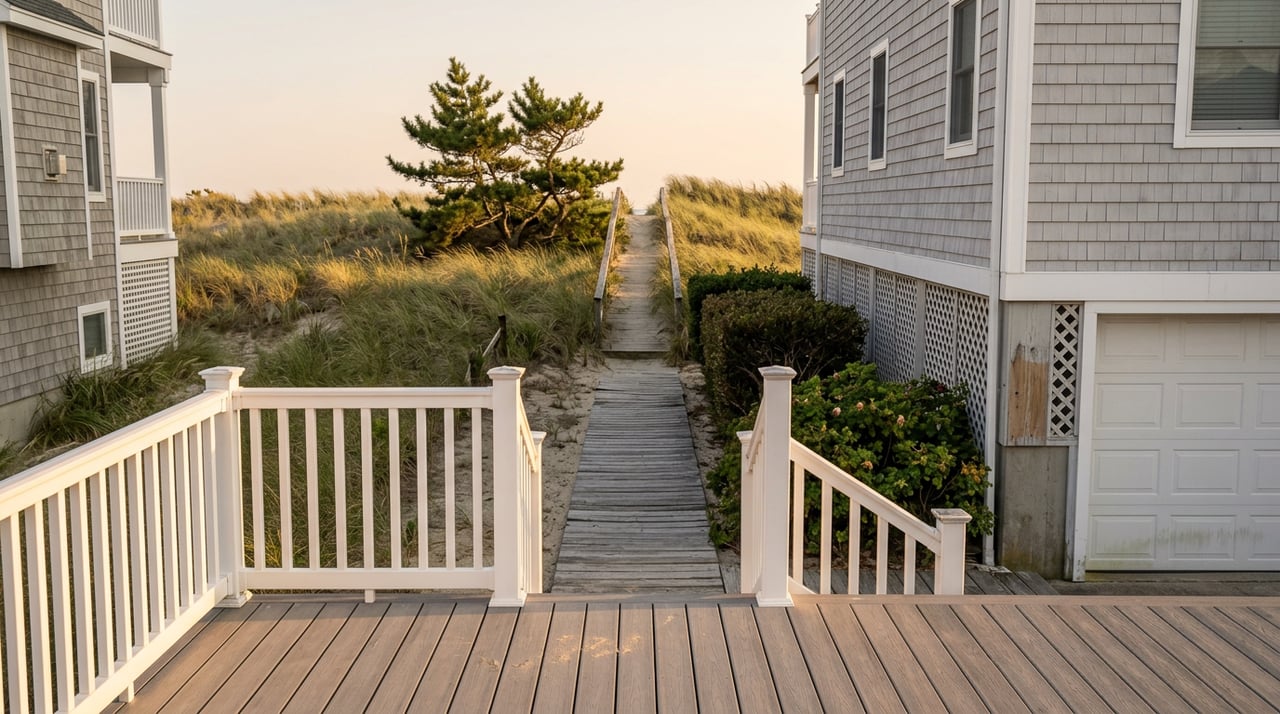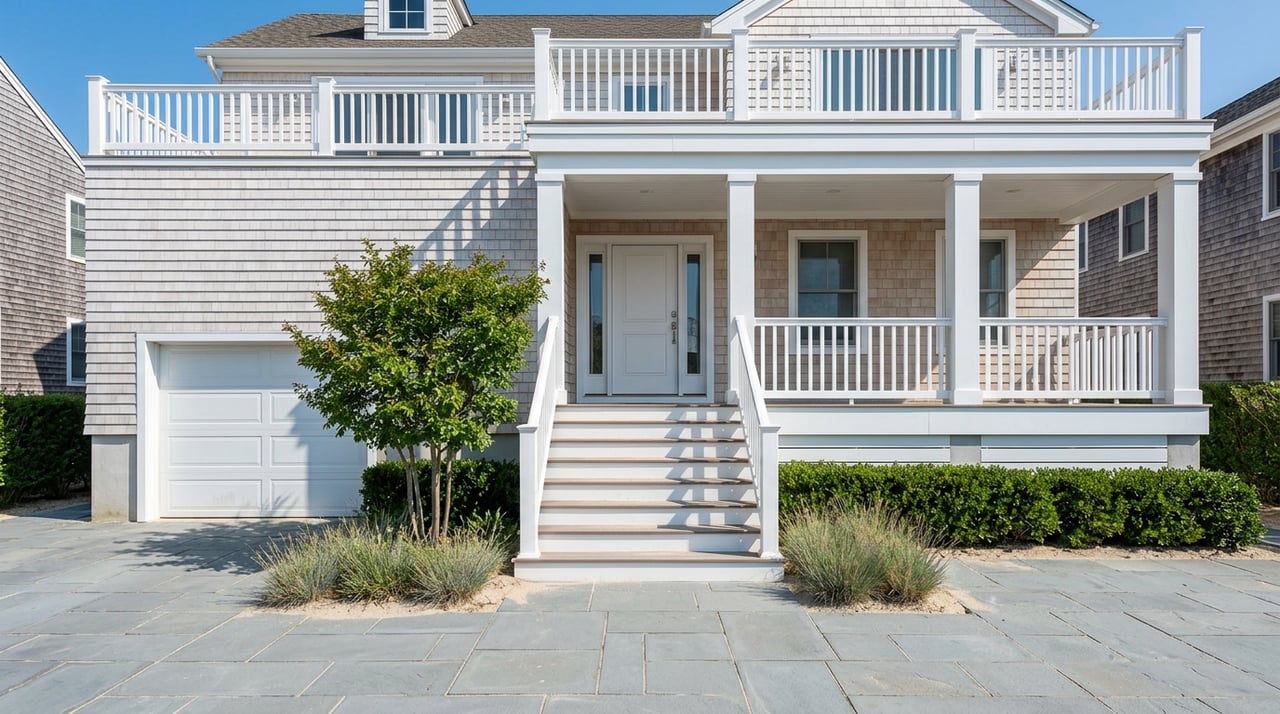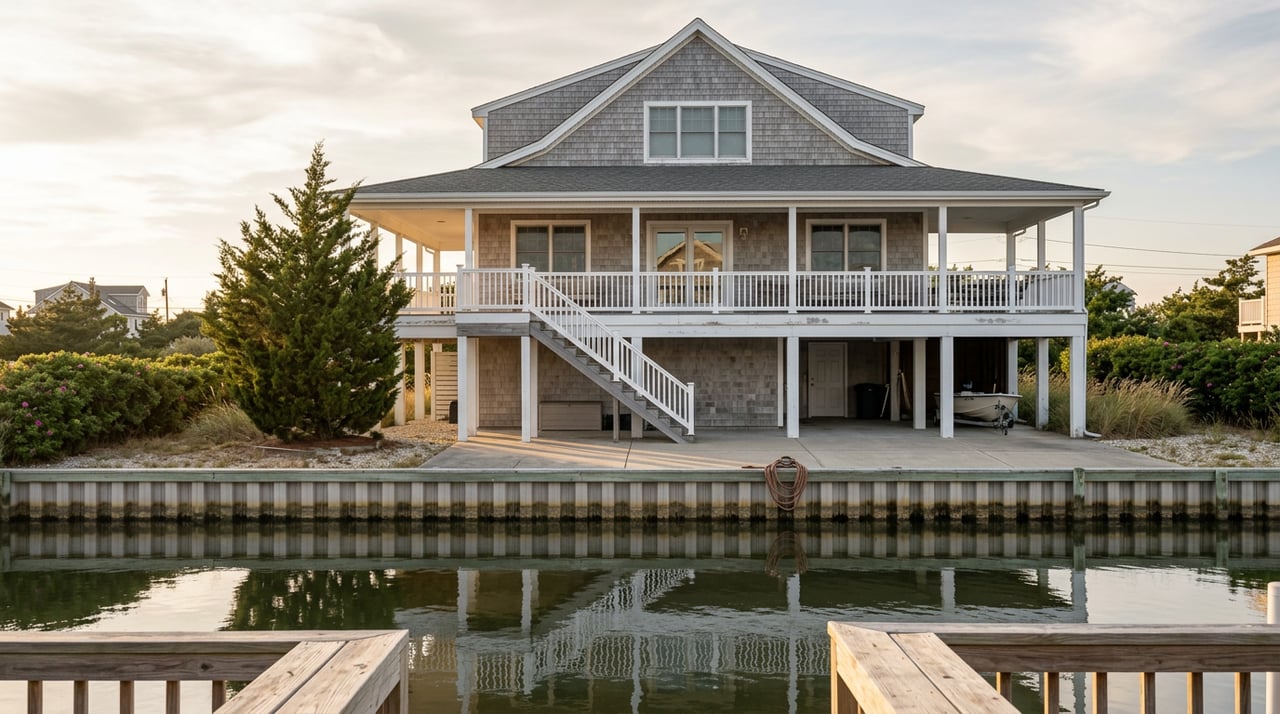
If you've been tracking Ocean City listings this year, you've probably noticed the tone has shifted. Homes are sitting a little longer. Sellers are cutting prices more often. The kind of bidding-war urgency that defined 2021 and 2022 has cooled into something closer to negotiation. Then you look at Wesley Avenue between 18th and 34th Street, the stretch locals call the Gold Coast, and none of that seems to apply. Listings move in weeks, not months. Asking prices hold. The softening everyone else on the island is feeling out never quite reaches this corridor.
That's not a coincidence, and it's not really about the ocean views or the lot sizes either, even though both are real. It comes down to who is writing the checks.
What "More Room To Negotiate" Looks Like Right Now
Citywide, the numbers back up what buyers are sensing. As of February 2026, Ocean City's sale-to-list ratio sat at 96.59 percent, and only 2.94 percent of homes sold above asking, down sharply from 10 percent the year before. Homes carrying price reductions climbed from 22.7 percent to 26.27 percent over the same stretch. By August 2026, the median home price across the city had settled at $1,255,000, with houses spending an average of 51 days on the market before going under contract, and 70 houses actively listed at prices ranging from $649,000 up past $10 million.
Read together, that's a market where sellers are adjusting to meet buyers rather than the other way around. If you're shopping in the Gardens, Central, or the South End this fall, that adjustment is real and it's workable. You have time to negotiate, room to ask for repairs, and sellers who are increasingly willing to talk.
The Corridor Where None Of That Applies
The Gold Coast doesn't behave this way, and local reporting has already named the reason. A K-shaped economy analysis published by OCNJ Daily in April 2026 described cash-heavy buyers and second-home owners as the segment of the market "largely insulated from the high interest rates that have sidelined the middle class," a group actively "consolidating local assets along the Gold Coast." That's a direct, named explanation for why one specific stretch of the island doesn't track the rest of it. These aren't buyers waiting on a rate cut or stretching for a jumbo loan. Many are paying outright, treating the purchase as a hedge rather than a stretch, which means the usual signals that move a financed market, mortgage rates, appraisal gaps, lender timelines, simply don't apply to them.
That pattern shows up at the top of the citywide ledger too. The number of Ocean City properties selling above $3 million rose from 27 units in 2024 to 42 in 2025, a jump concentrated almost entirely in beachfront and near-beachfront blocks like the Gold Coast. A buyer pool that size, paying in cash, doesn't need the rest of the island's inventory to loosen up before it acts.
The Gap, In One Number
Here's where the premium becomes concrete rather than anecdotal. Current listings show the Gold Coast's waterfront homes carrying a median asking price of $2.34 million, against a citywide waterfront median of $1.3 million for Ocean City as a whole. That's not a difference in ocean access or bulkhead quality. It's the same island, the same beach, and a price gap of roughly 80 percent driven by where the cash concentrates.
| Market | Waterfront median asking price (current listings) |
|---|---|
| Ocean City, citywide | $1,300,000 |
| The Gold Coast (roughly 18th to 34th St) | $2,340,000 |
The Gold Coast's reputation predates any of this. Grace Kelly's family kept a summer home at the corner of 26th Street and Wesley Avenue, built in 1929, and it still stands today, a fixture the Ocean City Historical Museum still references when telling the neighborhood's story. That pedigree explains why the Gold Coast has always carried a premium over other parts of the island. It doesn't explain why that premium is widening right now while other premium pockets of Ocean City are showing the first real signs of buyer leverage in years. For that, you need to look at financing behavior, not history.
What This Means If You're Actually Shopping Here
If your search is confined to the Gold Coast, the citywide market report you've been reading isn't your market report. Waiting for rate cuts to soften pricing here is waiting for a mechanism that doesn't drive this corridor's transactions in the first place. A financed buyer competing here is often competing against an offer with no appraisal contingency and no rate lock deadline, which means speed and certainty of funds matter more than a strong pre-approval letter alone.
That doesn't mean financed buyers are locked out. It means the strategy has to change. A tighter closing timeline, fewer contingencies, and a lender who can move fast all do more work on the Gold Coast than a slightly higher offer price would. And if flexibility matters more to you than a specific set of blocks, the Gardens, Central Ocean City, and the South End are currently showing the classic signs of a market where patience pays, longer days on market, more price reductions, and sellers genuinely willing to negotiate.
Average home values across Ocean City overall stood at $1,128,692 as of the end of August 2026, up 10.1 percent year over year, a number that reflects the whole island's mix. It's a useful benchmark for the market broadly. It tells you almost nothing about what a buyer will actually experience trying to close on Wesley Avenue.
A Few Questions Worth Asking Before You Write An Offer Here
Does the Gold Coast ever soften? It can, but on a different clock than the rest of the island. Because so much of the buying here is cash-driven and tied to longer-term wealth strategy rather than monthly mortgage payments, price adjustments tend to follow broader luxury real estate cycles rather than local rate moves. Don't expect the citywide inventory report to predict it.
Should I avoid the Gold Coast if I need financing? Not necessarily, but go in knowing the competition, and lean on an agent who can tell you which specific listings are more likely to be estate sales, relocations, or motivated sellers rather than pure hold-and-appreciate properties, since those are the ones where a well-structured financed offer still has a real shot.
Is this pattern unique to Ocean City? The mechanism, cash buyers insulated from rate cycles concentrating in a specific high-demand corridor, shows up in shore markets up and down the Jersey coast. What's specific to Ocean City is which streets it's happening on, and that's block-level knowledge worth getting from someone tracking it in real time.
If you're weighing a Gold Coast purchase against other parts of the island, or trying to figure out where your budget actually gets you the most leverage right now, The Anchor Group tracks these patterns block by block, not just citywide. Reach out for a market breakdown specific to the stretch of Ocean City you're actually considering, or start your search with a team that already knows which corridors play by different rules.